Key takeaway: To master authentic lamination, choose a 3-hour technical workshop capped at 8 participants. Focusing on AOP butter and T65 flour ensures professional results rather than just a social experience. You will typically invest €109 to learn the precise folding techniques required to achieve the iconic honeycomb structure and shatteringly crisp crust at home.
Best croissant classes in Paris
The legendary French croissant traces its roots back to the Austrian kipferl, but it took Parisian bakers generations to perfect the buttery, laminated masterpiece we crave today. You might easily find yourself lost among dozens of mediocre bakery workshops that use industrial margarine instead of the required technical precision.
This guide helps you select the most authentic paris croissant class by comparing professional lamination techniques and small-group environments to ensure you master the perfect honeycomb structure at home.
- ✔ Pros
- Hands-on lamination taught by professional pastry chefs
- Small groups of 6 to 8 for real one-on-one feedback
- You take home a dozen fresh pastries plus the printed or digital recipe
- Central Paris locations, easy to combine with sightseeing
- ✘ Cons
- Sessions run 2 to 6 hours, a real time commitment on a short trip
- Popular studios book out weeks in advance, especially on weekends
- Some cheaper workshops use margarine instead of AOP butter, so it pays to check beforehand
How to Select the Perfect Paris Croissant Class for You
Paris baking workshops typically last 2 to 6 hours, focusing on AOP butter lamination and T65 flour. Small groups of 6 to 8 participants ensure hands-on mastery of folding techniques, essential for choosing between social studio settings or professional kitchen intensives.
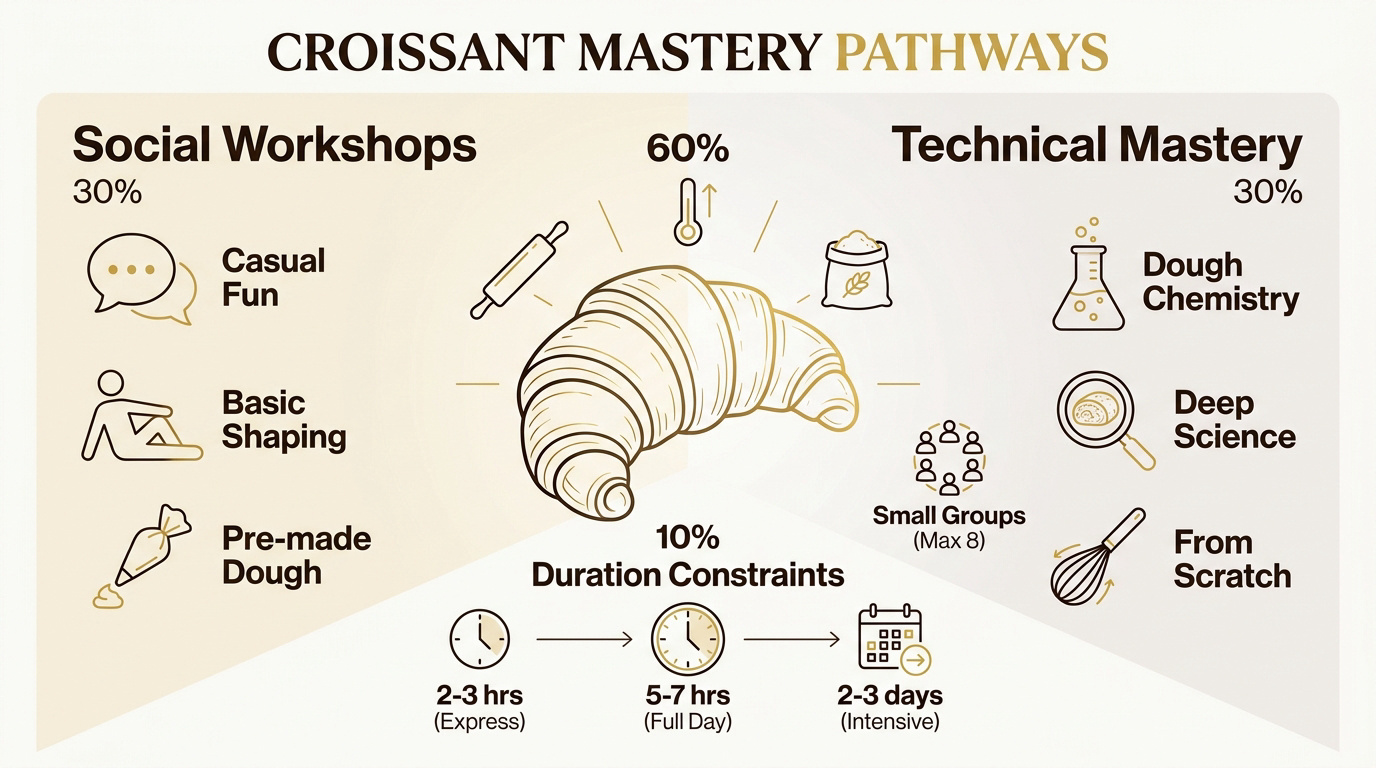
Choosing the right environment is your first real hurdle. While social workshops offer a relaxed vibe in cozy studios, professional labs focus on the rigorous chemistry of dough.
Social Workshops vs. Technical Mastery
Contrast casual studio vibes with professional lab environments. Social classes prioritize fun and basic shaping over deep chemistry. These sessions often feel like a warm gathering among friends.
Evaluate the depth of technical instruction. Professional classes dive into yeast fermentation and dough elasticity. These suit serious home bakers. Casual workshops work best for tourists seeking a light activity.
Focus on the outcome expectations. Social classes often provide pre-made dough for lamination. Technical sessions demand you start from scratch. Choose based on your personal baking goals.
Beyond the atmosphere, you must consider how much personal attention you actually need to master the turn.
Group Size and Duration Constraints
Small groups are vital for feedback. A chef cannot correct your folding in a crowd. Look for classes capped at eight students for the best experience.
Compare session lengths carefully. A two-hour workshop usually skips the proofing science. Intensive multi-day programs cover every detail of the viennoiserie cycle. Time commitment dictates the depth of your learning.
- Duration: 2-3 hours (Express)
- Duration: 5-7 hours (Full Day)
- Duration: 2-3 days (Professional Intensive)
The Technical Workflow of Authentic French Lamination
While choosing the right environment matters, the real magic happens within the chemistry of the ingredients and the precision of the fold. If you think any butter will do, you are setting yourself up for a dense, oily disappointment.
Why AOP Butter and T65 Flour Matter
High-fat AOP butter is non-negotiable for layers. It remains plastic at cooler temperatures. This prevents the fat from melting into the dough during the folding process.
The secret to a shatteringly crisp crust lies in the 82% fat content of Charentes-Poitou butter, which creates the distinct honeycomb structure every baker craves.
French T65 flour provides the necessary protein. It offers enough elasticity without making the pastry tough. Quality ingredients directly dictate the final buttery taste and airy texture.
Mastering the Lamination and Proofing Cycles
The physical process of folding is called tourage. You must lock the butter into the dough. This creates hundreds of microscopic layers that puff up when baked.
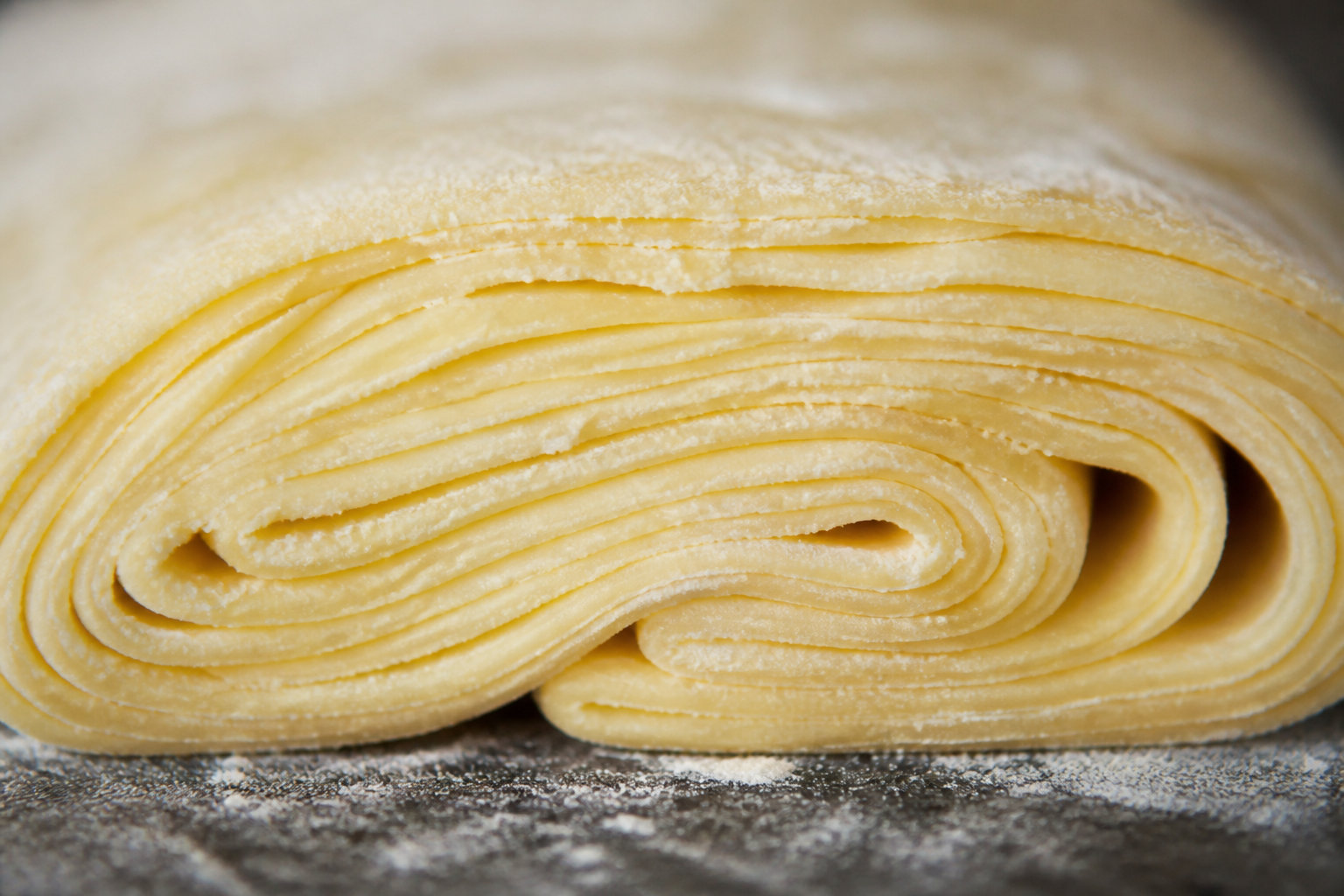
Resting times are essential for gluten relaxation. If you rush the folds, the dough retracts. Proper chilling ensures the butter stays solid. This patience results in a perfect, defined rise.
Proofing requires specific heat and humidity. The yeast needs time to produce gas. This expands the laminated layers into a light, airy crumb before the final baking.
Practical Advice for a Successful Baking Session
Beyond the technical folds, your physical comfort and preparation will determine how much you actually enjoy the heat of the kitchen.
Preparation: Footwear, Hair Ties, and Hunger
Wear comfortable shoes for standing. Professional kitchens have hard floors. You will be on your feet for several hours while working the dough.
Hygiene is a priority in these studios. Bring a hair tie if needed. Most classes provide aprons to protect your clothes. Arrive hungry because the final tasting is generous.
Drink plenty of water. The ovens make the room quite warm and dry.
Taking Home Your Pastries and Recipes
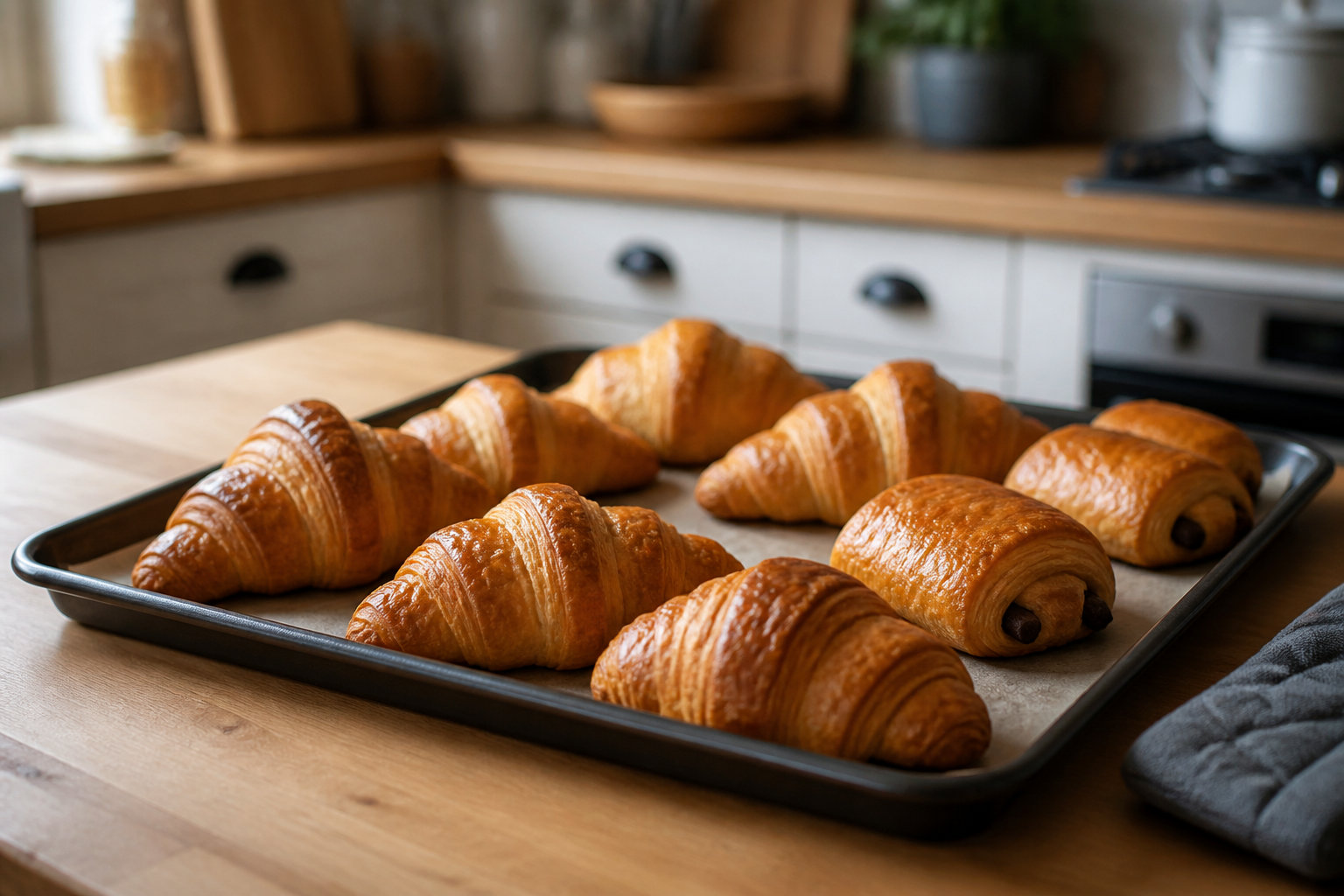
You usually make a dozen pastries. This includes both croissants and pain au chocolat. Most studios provide boxes for transport, but a sturdy bag helps.
| Feature | Standard Workshop | Intensive Class |
|---|---|---|
| Pastry Quantity | 6-8 | 12-15 |
| Recipe Format | Printed | Digital |
| Skill Level | Beginner | Intermediate |
| Take-home Box | Included | Optional |
Verify if recipes are digital or printed. Having the instructions is vital for recreating the magic at home later.
Booking Logistics and Neighborhood Selection Tips
Once you are ready to bake, you need to navigate the logistics of booking and finding the right Parisian corner for your workshop.
Private Sessions and Family-Friendly Options
Private sessions are available for groups. These are perfect for corporate events or birthdays. You can often customize the menu with the chef beforehand.
Check age requirements for children. Some workshops offer family-specific slots. Gift vouchers are also a popular culinary present.
Book early for weekends. These spots fill up months in advance.
Choosing the Best Arrondissement for Your Class
The Marais offers historic charm. Classes here feel cozy and traditional. In contrast, the 11th arrondissement is a modern culinary hub with professional labs.
Booking near local markets is smart. You can combine your class with a food tour. Location deeply affects the studio atmosphere.
Consider commute times. Central locations save precious hours during a short trip.
Mastering the AOP butter lamination and T65 flour ratios is the secret to recreating that shatteringly crisp honeycomb structure at home. Book your small-group paris croissant class today to secure your spot at the workbench before these popular sessions fill up. Transform your kitchen skills and bring the authentic taste of a Parisian morning to your own table forever.
FAQ
How long does a typical Paris croissant workshop last and what is the group size?
In my experience guiding foodies through the 5th and 11th arrondissements, most hands-on workshops last between 2 to 2.5 hours. This timeframe is perfect for learning the essential lamination and shaping techniques without feeling overwhelmed by professional bakery hours.
To ensure you actually get the chef’s attention, look for classes capped at 8 participants. I’ve seen smaller sessions with just 5 people, which are ideal for couples or friends who want a collaborative, low-pressure environment where every fold is corrected by a pro.
Which specific ingredients are essential for achieving a professional French flaky texture?
Don’t settle for basic supermarket supplies. For that shatteringly crisp crust, you must use T65 flour (often mixed with T45 gruau) for its high protein content and elasticity. It’s the secret to a strong dough that holds those delicate layers together.
The real star, however, is AOP butter from Poitou-Charentes or Isigny. You need a butter with at least 82% fat that stays plastic between 12 and 16°C. Using professional-grade fat prevents it from melting into the dough, which is how you achieve that coveted honeycomb structure.
Can I take home the pastries I bake and will I receive the full recipe?
Absolutely, and this is the best part of the deal! Most studios, like Ferrandi or Atelier des Chefs, provide take-home boxes for the dozen or so pastries you’ll create, including croissants and pain au chocolat. I always tell my clients to bring a sturdy bag to carry their bounty back to the hotel.
Regarding the technical know-how, these workshops are designed for you to recreate the magic at home. You will receive detailed recipes, either printed or digital, covering everything from the 18-36 hour dough rest to the final egg wash and baking temperatures.
Are these baking classes suitable for families or private groups?
Parisian studios are quite flexible. Private sessions are a fantastic option for birthdays or corporate events, allowing you to customize the menu with the chef. If you are traveling with children, simply check the age requirements, as many workshops offer specific family-friendly slots.
My verdict: if you are booking for a weekend, do it months in advance. These spots in central neighborhoods like the Marais disappear faster than a fresh tray of viennoiseries on a Sunday morning!